Los Angeles Night Life ( NightLife ), RMC

Academia - Academic, University of California, University of Southern California, Loyola Marymount.

Home | Hot Night Spots in Los Angeles | Recommended Restaurants | Dance in Los Angeles | Los Angeles Fashions | The Los Angeles Sports Page. | About Us | Public Services | Customer Accolades | Faith Based Socio - Cultural Initiatives: | Family Fun: | Academia - Academic, University of California, University of Southern California, Loyola Marymount. | The City of Ithaca. The Cultural Magnet Destination City. | The Non - Human Zoos, and some Human Parks Too! | Art Galleries in Los Angeles | Theatre - Movies - Opera - Ballet in Los Angeles | The Water Front in Los Angeles | When is the next Wave ? SURFING | Beautiful Spots - What is the Scene ? | Get Hep - Connections [ Links ] | Los Angeles NightLife: Academic - Academia Directory | Burbank Night Life ( NightLife ), RMC | Encino Night Life ( NightLife ), RMC | Hollywood Night Life ( NightLife ), RMC | Pasadena Night Life ( NightLife ), RMC | Long Beach Night Life ( NightLife ), RMC | Redondo Beach Night Life ( NightLife ), RMC | Santa Monica Night Life ( NightLife ), RMC | San Juan Capistrano Night Life ( NightLife ), RMC | Persian Gulf Veterans Los Angeles Rally Point. | Los Angeles NightlIfe: Entertainment Directory | Los Angeles NightLife: Blogs, Bloggers, and Journals Directory | Los Angeles Night Life ( NightLife ): Additional Links: | Night Life RMC Directory: | Los Angeles NightLife Fashions Directory: | Los Angeles NightLife Festivals Directory: | Los Angeles NightLife: Social Dance Classes Directory: | Los Angeles NightLife Students / Scholars Clubs Directory: | The American Missing Child - Children Night Life ( NightLife ), RMC Network: Los Angeles NightLife | Traffic Stop Directory: | Los Angeles International InterCultural Communications Directory:

Universities and Colleges:
Los Angeles is real academic beltway community...

multicultural04.jpg

Science, Technologies, Public Policy and Ethics.

Science Technologies, Public Policy and Ethics.  The central informative web site which details the leading factors of new science and the public policy and ethical  cancerns which emerges as a result.
 
Support of Free Scientific Inqury, and Open Research:
 
Proper review of all data to assure accuracy of all information published on this site:
 
Ethical considerations are also solicited so long as they do not in any manner what so ever seek to politicalize any field of research, or the innovator and scientist in the process of discovery.
 
More importantly, science and technology as both a field and profession must be totally responsiable for the security aspects of every innovation made.
 
This is assisted, networked and further developed by the following processes.
 
Public Access:  This feature makes the science more understandable to a larger population segment. Moreover, to inspire others with considerable academic experiences to formulate a democratic informative focus which assists greater comprehesion by the social, cultural, spiritual and political leadership about  major science and technological issues of today.


Family posing on graduation day

nudc04.jpg.w180h166.jpg

songye-titus-fallery-art-gallery-gallieries-artist-studios-ithaca-night-life-nightlife-ny.jpg

Los Angeles Southwest College.

07575-black_hat_woman.jpg-night-life-nightlife-rmc.jpg

 Los Angeles City College.

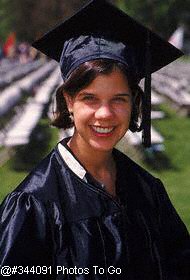
Outdoor portrait of female graduate

paris-hau0700020_jpg.jpg

Chinese Moon Festival

carpage-rita-latin-salsa-dasnce-cities.jpg

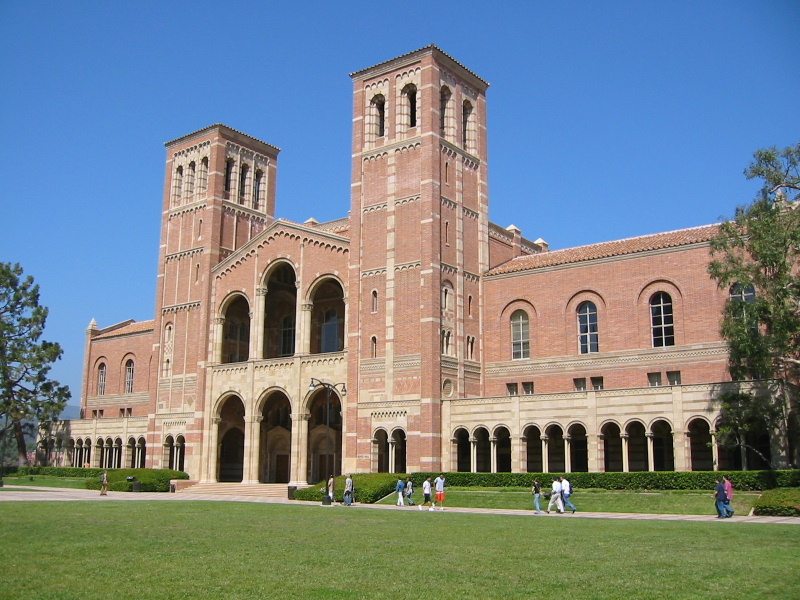
rhall.jpg
University of California, Los Angeles

Photos: From Wikipedia, the free encyclopedia

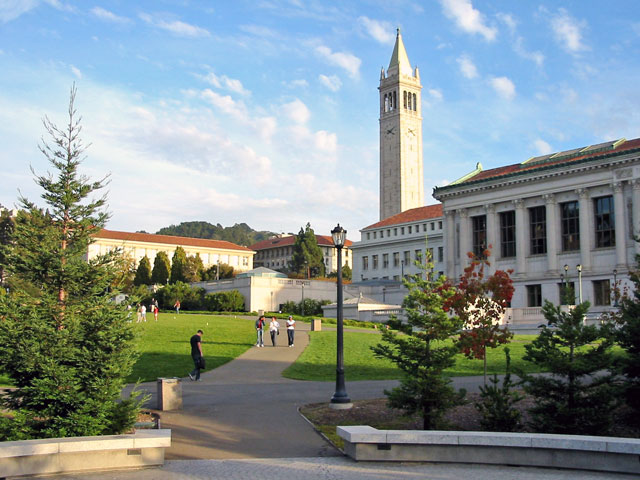
berkeley_glade_afternoon.jpg
Memorial Glade, at the center of the Berkeley campus.

The Stanford University: Students / Scholars Clubs Blog.

Off Campus Activities - Socials:
Realities and Renewed Revolutionary Traditions:

coollogo_com_23762819-socials.gif

Click on the button - banner on your left.
Note:The opportunities to do hold activities off campus are only limited by market forces ( cost to participation ), and the legal statues of the area itself.  Whereas campus activities are limited by administrative anxieities, and thus restrictions are for more limiting-though the environment is safer.

Academia ~ Los Angeles ~ International Studeents / Scholars Intercultural Communiccations Resources and Promotions .
 
Academia ~ Los Angeles Night Life ( NightLife ), RMC ~ Scholars2000 Forum .

Cultural Zionism
army-tzabar002.gif
WebSite

Add your content here

 
Other International and National Academic locations:
 
Academie des Paris [ WebSite ] Atlanta [ WebSite ] Baghdad [ WebSite ] Buffalo [ WebSite ] Chicago [ Website ] Berlin [ WebSite ] London [ WebSite ] Washington DC [ WebSite ] Toronto [ WebSite ] Athens [ WebSite ] Copenhagen [ WebSite ] Gdansk [ WebSite ] Oslo [ WebSite ] Tel Aviv [ WebSite ] Moscow [ WebSite ] Syracuse [ WebSite ] Kiev [ WebSite ] Cortland [ WebSite ] Dallas [ WebSite ] Montreal [ WebSite ] New York City [ WebSite ] Miami & Miami Beach [ WebSite ] Los Angeles [ WebSite ] Rochester [ WebSite ] Binghamton [ WebSite ]

International Students Resources :
Global Diversities:

Chinese New Year Festival

International Students / Scholars Intercultural Communications Resources and Promtoions - LA.
International Students / Scholars Intercultural Resources - open forum [ Scholars 2000 - Los Angeles ]

Ithaca College Clubs and Students / Scholars ~  Cornell University Clubs and Students / Scholars ~ The Love Report Students Notes developed from Ithaca, New York [ The Student Love Center of America ]

Links:

Les Avant Garde
showletter-butterfly.gif
WebSite

 Ithaca Night Life ( NightLife ), NY Academia - Academic .

Thesis / Think :

 
Information and design are the new magic of the Internet.  Here is where International Students / Scholars can find the critical information needed to make their participation in America's academic culture more pleasure'able.
 
Article I
 
There are three distinct elements which I considered when looking at the internet and how can I get the " best " message out in what I publish which best represents the actual intent of my personality, interests, skills, and knowledge.
 
One.  Fundemental to everything in which I posted / published was based upon hard empirical evidence.  Thus very hard core research was involved in every aspect of any bit, or in this case " byte " of information, and the additional deliberate action to force introspective personal discoveries, is the continued some-what selfish motives and passions behind each step taken.
 
 
Two.  The single aspect of InterCultural Communications as a very deliberative means to produce events was the essential empowering element which I found out is the primary socicultural and sociopolitical power platform for the future.  The power comes from the transition of time, and of discourse of additional aspects of human development in which we, as a civilization are slowly becoming aware, which events which are based upon InterCultural Communications becomes the very formative up-evolutionary behaviorial anthro-developmental traits which triggers conflict preventioning to occur.  And it is exactly here, "Conflict Preventionng where everything else is derived.  The evidence for this truthism is overwhelming.
 
Three.  The actual recognition of the objectiveness of the internet itself, in as much as everything it views from various serach engine crawlers or spidders, bugs, has the interesting clean slate encryption - as each webpage is initial judged.  Moreover, it is from here, and the further understanding of the various technologies involved in both hardware and software development that  wide -spreading of content was imperative; this demanded higher and more deeply penitrative knowledge, and as a result I have well worn used at least 7 libraries within the academic central community of Ithaca, New York.  The central factor for this very timely and costly action is that there are distinct connections to the bugs of the internet, and empirical information-hard factual content information which triggers higher results.
 
The internet goes real buggy over hard and qualified content information.  Like a camel to desert oais water well.  At first it can not get enough.  Then later its rider is likewise very satisfied as a result. Thus, a deeping and harder introspection of each information byte produced the qualified results.
 
Thus you now have the initial three points, and what they eactly entail, and why everyone should begin to think differently is not only based upon the growing dependency on the growth of the internet for future prosperity, but that the single physical action we should take is to produce those events which promotes InterCultural Communications.  To do this, we need addtional International Students / Scholars - which according to my research means an additional 4.8 million addtional International Students / Scholars.
 
Does the world have them to offer?
 
Yes!
 
The pedagogy of each institution of higher education will likewise have to adjust their academic curriculum and grading proceedures to meet the resulting discourse resultant evaluations,  faculty evaluations - student- and teaching aspects adjustments,  adjunctive financial support structures - and the needed additional principle America academia will have to adopt to modify its pedagogy as a result. 
 
Then, and only then, will be very clear what Thinking Differently means both a vision, and the circumstance resultant as a result of making such a commitment.
 
Article II
 
We have here in the United States millions, as it now seems, of migrate labors who are primiarly from South America - even though the Asian are now becoming more numerous.   This is opportunity.
 
What this means, from my own personal point of view is that these hard working peoples should be out-reached to for these very specific factors:
 
  1. Access what are the conditions back in their home country, and from which calibrate a community needs assessments.
  2. Measure further interests on future jobs developments by the traning needs they wish to recieve while working in the U.S, and Canada.
  3. Determine the area of their home community's available resources, and sociocultural and socioeconomic existing structures.
  4. Confirmed all date base requirements for a think tank resolve in developing career - jobs training program to coordinate with loans and credits for future economic development and construction of industry, or services in their home of origin
 
Mr. Roger M. Christian.
You should be getting the point now!

Resource Portals:
Interesting Items:
Los Angeles Area Connect: Resource portal on the Universities and Colleges within the Los Angeles area - source guide for this webpage.

Support Blogs - Bloggers:
Blog Logos:
 

hiphop_3239.jpg


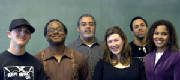
(L-r) Hip-Hop Studies Working Group members Michael Kahn, Michael Barnes, Rickey Vincent, Kendra Salois, Kofi-Charu Nat Turner, and Erinn Ransom. (Deborah Stalford/UC Berkeley photos)


Hip-hop scholars push for recognition

– In academic disciplines ranging from sociology to law, ethnomusicology to history, and education to African American studies, students at the University of California, Berkeley, are increasingly tapping into hip-hop culture for their research and field work.

It's a sign of the times. The three-decade-old, Bronx-born pop culture phenomenon, which encompasses rap, DJing, breakdancing and graffiti - influencing youth expression worldwide - is inspiring a growing body of scholarly discourse.

"Nothing else, currently, allows for you to talk about race, class, gender, sexuality, nationality, politics and the economy than hip-hop music and culture," said Michael Barnes, a doctoral student in sociology, whose Ph.D. dissertation is titled "Can't Fake the Realness: Race, Place and the Construction of Authenticity in Hip-Hop DJ Culture."

But when it comes to finding faculty members to review and assess their research, hip-hop scholars - undergraduate and graduate students alike - say they face a generational divide. Courses are taught at only a smattering of research universities around the nation. Moreover, few professors feel sufficiently qualified or in vogue to evaluate such hotly debated issues as rap and feminism, the copyright complexities of sampling and remixing, and the authenticity of Eminem. While the hip-hop generation officially began in 1964, most members of it were born in the 1970s, '80s and '90s.

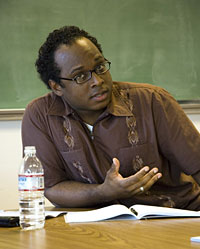
hiphop_3287.jpg
'Nothing else, currently, allows for you to talk about race, class, gender, sexuality, nationality,

To break down this barrier, Barnes has formed the Hip-Hop Studies Working Group through a grant from UC Berkeley's Townsend Center for the Humanities. The effort is designed to provide support for scholars of hip-hop, to harness the research taking place across campus and, some hope, to eventually establish a formal hip-hop studies program. At the group's monthly meetings in Barrows Hall, students discuss the origins of rap and hip-hop, how hip-hop intersects with race, class, gender and sexuality, and hip-hop's relationship to globalization and corporate America.

Texts recommended by Barnes include Jeff Chang's "Can't Stop, Won't Stop: A History of the Hip-Hop Generation," which tracks hip-hop back to the Bronx in the late 1970s, and the 1979 song "Rapper's Delight," one of the first hip-hop hit singles, by the American trio The Sugar Hill Gang.

As one might expect, the meetings spur provocative debate, including the question of how to get a reliable grounding in hip-hop history. "There needs to be at least one class that gives you a comprehensive history of hip-hop," said student and ASUC senator David Wasserman at the group's first meeting last September. He had been tracking the evolution of rap music videos for his "Black Freedom Struggles" history class.

"Who would teach the class?" asked Rickey Vincent, a doctoral student in ethnic studies who teaches a summer course at UC Berkeley called "From Be-Bop to Hip-Hop." The last faculty-taught hip-hop course, "Power Moves: Hip-hop Culture and Sociology," was taught in 2000 by then-lecturer Halifu Osumare, now an assistant professor of African American studies at UC Davis.

But mostly, hip-hop on campus has been a student-driven affair, with DeCal courses on such topics as the poetry of Tupac Shakur, and the group, Students for Hip-Hop, bringing performers to campus. Some faculty members, though, expect hip-hop studies to eventually win a more formal place in academia.

"Some disciplines are more favorably disposed toward it than others, where the incursion of popular cultural studies continues to be met with suspicion," said Brandi Wilkins Catanese, an assistant professor in the campus's Department of Theater, Dance, and Performance Studies and in African American Studies.

"But this is a bias that will certainly fade," she added. "There are scholars who have published books about hip-hop and can mentor another generation of scholars through the research process to help grow the field."

The new generation of hip-hop scholars includes Kofi-Charu Nat Turner, a doctoral candidate in education who ranked among Ebony magazine's "30 Leaders of the Future" in 2001 and has taught and studied in Ghana and Japan.

Turner believes hip-hop can promote literacy, if channeled in the right direction. For example, he is involved in a program called Digital Underground Storytelling for Youth (DUSTY), in which West Oakland students use digital technology to produce performance pieces. Not surprisingly, hip-hop permeates their work.

"Hip-hop is the primary language students bring with them to school," said Turner, a core member of the Hip-Hop Studies Working Group. "To ignore the language and the existence of hip-hop culture altogether is a failure to provide equal education under the law."

Another serious hip-hop scholar and member of the working group is Erinn Ransom, a doctoral student in African American studies. Her dissertation work at UC Berkeley is focused on connecting rap music to black radical thought, U.S. black social movements of the 1960s and 1970s, and youth consciousness.

 
'Hip-hop is the primary language students bring with them to school. To ignore the language and the existence of hip-hop culture altogether is a failure to provide equal education under the law.'

 
-Kofi-Charu Nat Turner, education Ph.D. candidate-

"Using hip-hop in the curriculum will help bridge the divide between the 'academic' and the 'real world,'" said Ransom, who is set to teach a hip-hop course at UC Berkeley this summer. "It can ground theories that may seem to pertain only to dead European thinkers with what is happening here today."

Hopefully, Ransom said, the formation of the Hip-Hop Studies Working Group and the buzz it creates will "signal to departments that there is a need to seek and hire scholars with expertise in the field."

Jabari Mahiri, an associate professor of education, agrees that hip-hop scholarship should be taken seriously at the university and appreciates pioneering efforts like those of the Hip-Hop Studies Working Group. He frequently reviews research that pertains to literacy and hip-hop culture, but readily admits that he doesn't listen to rap music, and that those immersed in the culture are more qualified to elevate hip-hop's place in academia.

"These young scholars are going to be the ones to bring legitimacy and understanding of hip-hop culture to the academic community," Mahiri said. "They have to be the ones to teach the older scholars the relevance of doing this kind of work, and create a new paradigm."

As founder of the group and as a Ph.D. student hitting the job market, Barnes doesn't have a lot of time to complete all his plans for hip-hop on campus. This semester, though, he hopes to bring some hip-hop scholars and artists to campus and lay the groundwork for a future conference. One guest scheduled to speak to the group this semester is H. Samy Alim, an assistant professor at UCLA, linguist and author of several books on hip-hop.

Whatever the fate of hip-hop at UC Berkeley, one thing is certain: The topics that traverse hip-hop are infinite. Just ask Larisa Mann, a Ph.D student in UC Berkeley's School of Law's Jurisprudence and Social Policy program. She is studying how copyright laws impact creativity in the production of music, including hip-hop.

"A study of information asymmetry in contract negotiations in the hip-hop music industry would make a great econ case study, or the politics of sampling in a sociology class," said Mann, who blogs and who spins at clubs, parties and benefits under the moniker DJ Ripley.

"In the same way academia examines other social forces, it should pay attention to something that is economically, politically and socially shaping how many view the world and engage with it," Mann said

Hip Hop AfricaSphere . 

Tri Falcon and Dove Productions * 103 West Seneca, Suite 206A * Ithaca * NY * 14850